About us
Why DeepBliss exists
I wanted to use a lifetime of audio and product skills to help people be their best selves. This is what came out of that.
01 · Origin
Built for myself first
DeepBliss started as something I made for myself, not a product. I was going through one of those periods life occasionally hands you — the kind where the usual coping mechanisms stop working and you start scanning for tools that actually move the needle.
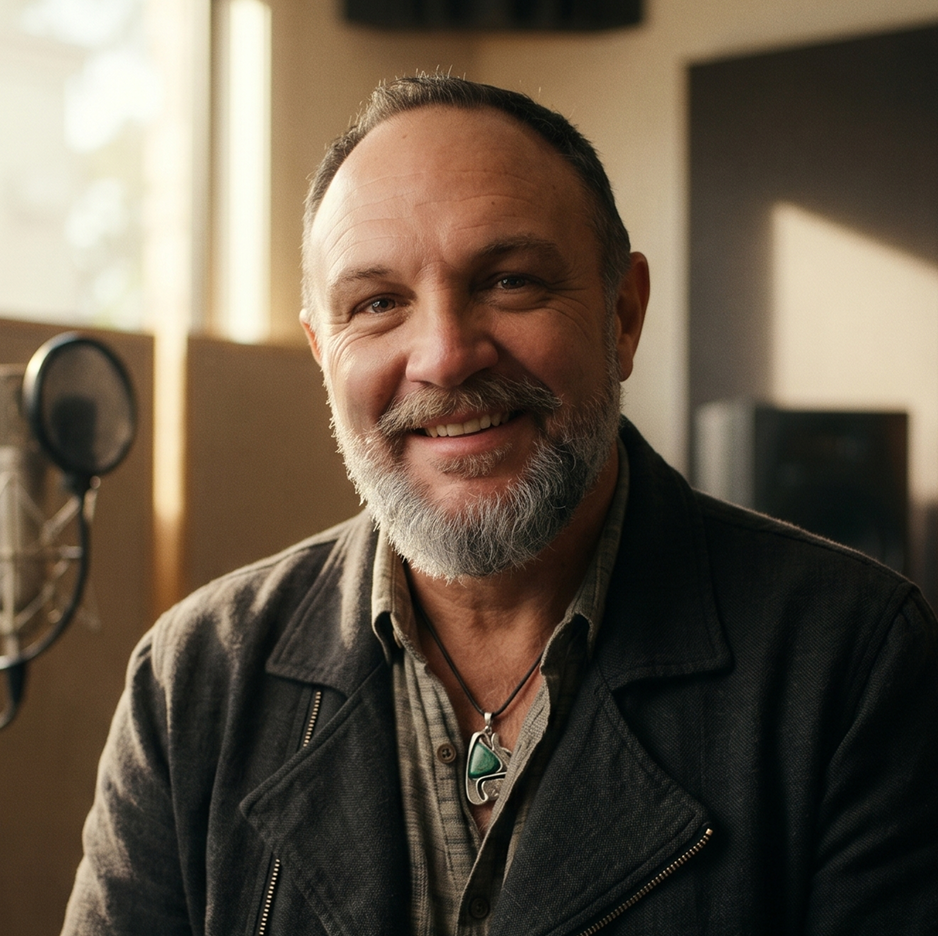
What I had on hand was twenty years of audio production craft, six years of broadcast radio behind a microphone, and a stubborn belief that the inner dialogue running underneath everything matters more than most people realise. So I started building. I recorded affirmations in my own voice — not motivational platitudes, but specific CBT-shaped reframes for the exact thought patterns I was stuck in. I layered them over binaural beats at frequencies the research actually supports.
I started walking forty minutes through Balinese rice fields every morning with the mix in my headphones. By the time I reached the coffee shop, I was a different person. Not in a wellness-influencer way. In an “I can actually feel the day differently” way. The mix was working on something the off-the-shelf meditation apps had failed to touch.
That’s when it occurred to me: if this works for me, it works for other people too. The catch is that almost nobody has the audio engineering chops to build it for themselves. So I started turning the manual process into software. That software became DeepBliss.
02 · The skills behind it
The right toolkit for this problem
The credibility behind DeepBliss isn’t clinical — it’s audio and product. Before this, I co-founded Foodkit, the digital ordering platform that processed $320M+ in gross sales across Southeast Asia for Domino’s, Nando’s, and Dairy Queen. Before that, I spent six years on-air at RRR FM in Melbourne — Australia’s largest community radio station — learning what voice work actually does to people listening alone in their cars. Before that, Ginja, which overtook Bangkok’s incumbent food delivery operator in three months. Twenty-plus years of building things in tech, layered on a lifetime around audio engineering — which turns out to be the exact toolkit you need to make a product like this. Not a clinician. Not a guru. A builder with the right skills, applied to a problem I had myself. The full evidence layer — every citation, effect size, and limitation — lives in one place.
03 · Honesty hedges
What I don’t claim
I am not a clinician. I am not a doctor. DeepBliss is not therapy and not a substitute for medical care.
The CBT-informed affirmation framework inside the product was developed in collaboration with a clinical psychologist — structured cognitive interventions, not generic positive thinking. This is clinician-informed mental wellness, not woo-woo self-help.
If you have a diagnosed condition, please talk to your healthcare provider. DeepBliss is a wellness tool for people who want to recalibrate their state — not a treatment for people who need clinical care.
04 · Conflict-of-interest
How we make money
DeepBliss runs on a freemium subscription model. The free tier (Discover) is genuinely functional. The paid tiers include more voice clones, longer audio, and dual-layer entrainment.
I have a commercial interest in DeepBliss succeeding. That’s exactly why I publish what the research does and doesn’t support — including effect sizes, limitations, and contraindications like the brown-noise-for-ADHD gap. It’s also why our comparison of the 2026 AI affirmation app landscape names where competitors do specific things better than we do. A site that overclaims is a site I wouldn’t trust as a reader.
05 · For practitioners + Connect
If you want to talk
If you’re a coach, hypnotherapist, or wellness professional interested in using DeepBliss with clients, the practitioner page covers clinical-context use cases, consent flows, and what the evidence does and doesn’t support.
Otherwise — I’m on LinkedIn at linkedin.com/in/nickmorgenstern. Open to researchers, practitioners, journalists, and anyone with sharper evidence than what we’ve cited.
Last reviewed: 2026-05-14 by Nick Morgenstern