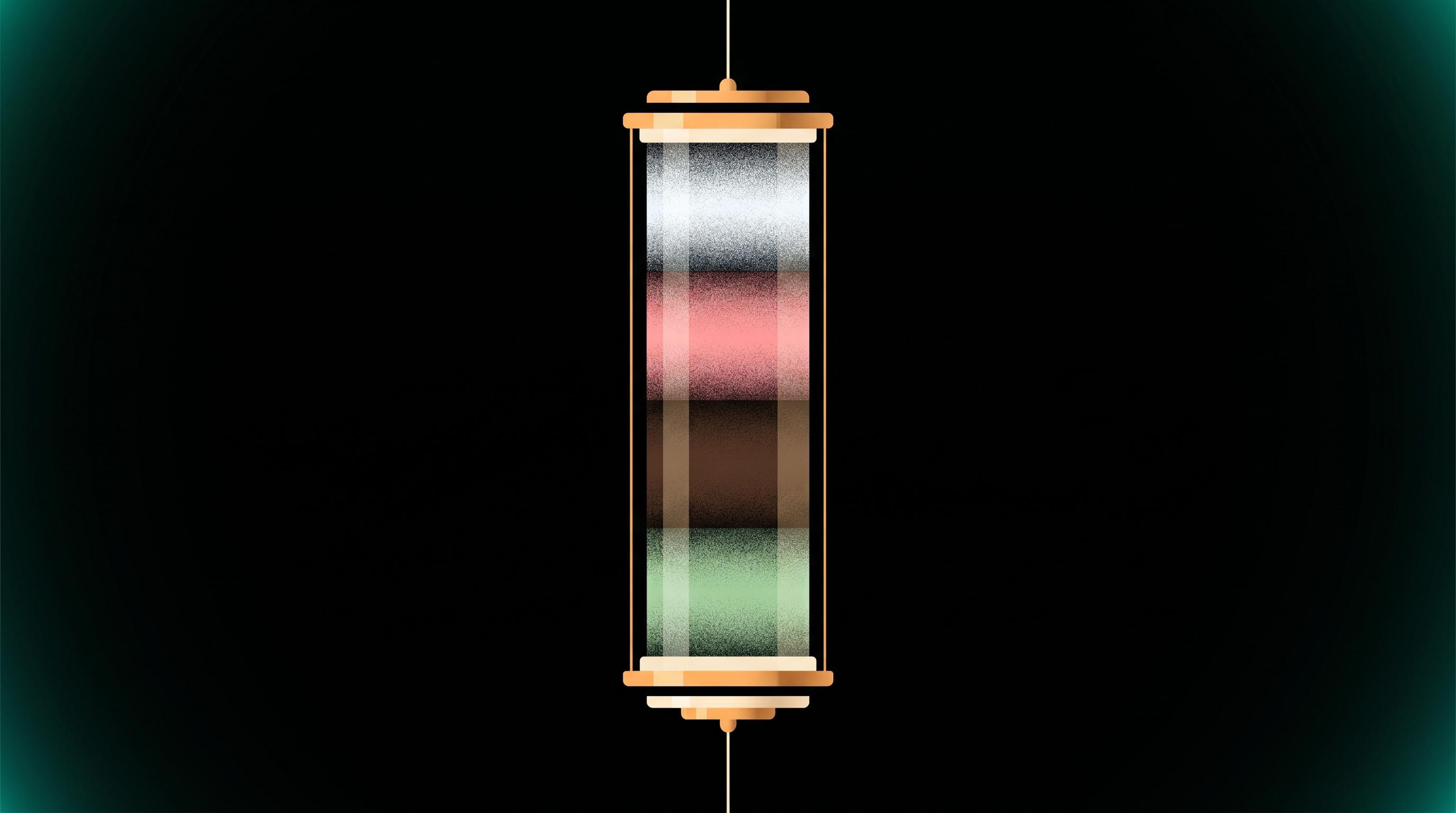
Colored noise isn't one thing. White noise gives a small focus benefit for ADHD brains (Nigg (PMID 38428577) 2024, g=+0.249) while slightly impairing non-ADHD focus; pink noise helps mask sound for sleep; and brown noise — despite its viral popularity — has zero peer-reviewed ADHD trials. The right choice depends on your neurotype and what you're trying to mask.
Your colleague swears by brown noise for focus. Your friend's baby only sleeps with white noise. Your sister with ADHD discovered pink noise on TikTok and claims it changed her life. (Many of these soundscapes are paired with binaural beats and other audio entrainment methods.) Meanwhile, you're wondering: what's the actual difference between these "colors" of noise, and does any of this have scientific backing—or is it just the latest wellness trend?
Sound preference and clinical outcomes are different questions. Nigg 2024 (PMID 38428577) reviewed white or pink noise in ADHD and elevated-symptom samples; those results do not establish that every noise color helps everyone focus.
What Are Colored Noises?
Think of colored noise as sound's version of light's spectrum. Just as white light contains all visible wavelengths, white noise contains all audible frequencies at equal intensity. Other "colors" emphasize different parts of the frequency spectrum, creating distinct sonic textures.
Here is the evidence at a glance — the rest of this guide unpacks each row:
| Noise color | Character | Best-supported use | Evidence strength |
|---|---|---|---|
| White | Full-spectrum "static" | ADHD focus (helps ADHD, impairs neurotypical) + sleep masking | Moderate, population-specific (Nigg (PMID 38428577) 2024: g=+0.249 for ADHD vs g=-0.212 for non-ADHD) |
| Pink | Balanced "rainfall" | Sleep masking; memory benefit only via lab phase-locked delivery | Strong for phase-locked memory (Papalambros (PMID 28337134) 2017); weak for everyday continuous play |
| Brown | Deep "rumble" | Subjective calm / personal sleep preference | None — zero peer-reviewed ADHD trials despite 86M+ TikTok views |
White Noise distributes equal energy across all frequencies, creating that familiar "static" or "hissing" sound—like a TV tuned between stations or a fan running continuously.
Pink Noise decreases in intensity at higher frequencies (about 3 decibels per octave), producing deeper, more balanced tones. It sounds like steady rainfall, rustling leaves, or gentle ocean waves. The name comes from its spectral distribution resembling pink light.
Brown Noise (also called red noise) decreases even more dramatically at high frequencies (6 decibels per octave), creating deep, rumbling sounds like thunder, strong waterfalls, or heavy rain on a roof. Despite the name, "brown" refers to Brownian motion (random particle movement), not the color.
Beyond these three, you'll occasionally hear about blue, violet, gray, and green noise—but these lack substantial therapeutic research and exist primarily as technical audio engineering tools rather than wellness applications.
The Research-Backed Benefits
White Noise: The Population-Specific Powerhouse
White noise demonstrates the most robust research foundation among colored noises, but with a critical twist that changes everything about how we should think about its benefits.
The ADHD Advantage
Nigg et al. (2024, Journal of the American Academy of Child & Adolescent Psychiatry), a meta-analysis examining 13 studies with 335 ADHD participants, found that white noise provides small but statistically significant benefits for laboratory attention tasks. (For why brown noise — despite its TikTok popularity — has zero supporting evidence for ADHD focus, see Brown Noise for ADHD: What Zero Studies Actually Show.) The effect isn't dramatic, but it's consistent and measurable.
The mechanism follows the Moderate Brain Arousal model: individuals with ADHD have lower baseline dopamine levels, reducing neural signal-to-noise ratios in the brain. External white noise increases phasic dopamine release through a process called stochastic resonance—essentially, adding the "right amount" of random stimulation optimizes neural processing.
Think of it like this: if your brain's radio signal is too weak to hear clearly, adding a specific level of background static can paradoxically make the signal more detectable. For ADHD brains operating below optimal arousal levels, white noise brings them up to a more functional sweet spot.
The Neurotypical Reversal
Here's where it gets fascinating and absolutely critical: the same white noise that helps ADHD individuals actually harms neurotypical performance.
Nigg 2024 (PMID 38428577) found an average reduction in task performance in non-ADHD comparison samples. This is a group average, not a prediction for each listener.
The relationship follows an inverted-U curve where optimal noise levels differ by neurotype. ADHD individuals perform best with higher stimulation levels (75-85 dB), while neurotypical individuals perform best at much lower levels (45-60 dB) or in silence. What's helpful background noise for one nervous system becomes distracting interference for another.
The practical implication: White noise isn't a universal focus tool. It's a population-specific intervention that benefits individuals with ADHD-type arousal patterns while potentially hindering those without.
Sleep Enhancement Across Populations
White noise can mask surrounding sounds. That use should not be presented as a universal sleep benefit.
The mechanism is straightforward: white noise masks environmental sound variations. Your brain doesn't wake to sounds themselves as much as to changes in sound. Steady white noise raises the threshold required for disruptive sounds to break through, creating more stable sleep conditions.
We do not make a clinical sleep-improvement claim for continuous white noise here without a directly identified source.
For infant sleep, white noise proves particularly effective—though parents should follow American Academy of Pediatrics recommendations: maximum 50 dB volume with devices placed at least 7 feet from sleep areas to protect developing auditory systems.
Broadband masking is also a different mechanism from rhythmic entrainment: if your sleep problem is a racing mind rather than a noisy street, delta-frequency binaural beats for sleep take the tonal route — aiming to nudge brain rhythms rather than raise the noise floor (the direct sleep evidence is thinner than pink noise's, as that guide explains honestly).
Pink Noise: The Memory Consolidation Champion
Pink noise has generated perhaps the most exciting research findings, though with important caveats about what consumer applications can realistically deliver.
The Northwestern Breakthrough
Papalambros et al. (2017, Frontiers in Human Neuroscience), a small pilot with 13 older adults at Northwestern's Zee lab, demonstrated that pink-noise pulses synchronized to slow-wave sleep oscillations improved next-day word-pair memory recall. The effect was measurable and statistically significant, though the sample size was small.
The sophisticated approach used real-time EEG monitoring to deliver 50-millisecond pink noise pulses exactly timed to slow oscillation up-states during deep sleep. This closed-loop system increased slow-wave activity across the night, with clear dose-response relationships: 20% increases in slow-wave activity yielded approximately 2 more words recalled, while 40% increases produced 9 additional words recalled on a 44-word-pair test.
The mechanism appears to involve stochastic resonance amplifying weak physiological signals, creating "trains" of successive slow oscillations rather than isolated cycles, and enhancing the hippocampal-neocortical dialogue necessary for memory consolidation.
The laboratory findings do not validate continuous pink noise from a consumer app as a treatment for cognitive decline.
The Consumer Reality Check
Here's the critical limitation: the memory benefits require closed-loop, phase-locked delivery that consumer products cannot currently provide. This technology demands real-time EEG monitoring and algorithmic sound delivery precisely timed to brain activity—Northwestern researchers hold patents pending, suggesting commercial applications are likely years away.
The continuous pink noise that consumer apps easily deliver—just playing pink noise throughout the night—appears to provide different, more modest benefits.
Open-Loop Pink Noise: What It Actually Does
A 2023 home-based sleep monitoring study (using ~55 dB continuous pink noise over the course of a night) examined the effect on creative insight the following morning. The findings were sobering: continuous pink noise did not increase creative insight compared to silent sleep and actually performed statistically similar to the wake condition—meaning participants lost the normal cognitive benefits that sleep typically provides.
The mechanism: pink noise shortened the initial N1 sleep cycle after sleep onset, and N1 duration positively predicted insight performance. There appears to be a "creative sweet spot" in early light sleep that continuous ambient noise disrupts, even at comfortable volumes.
The divergence is stark: phase-locked pink noise provides dramatic memory benefits, while continuous pink noise may actually interfere with certain sleep-dependent cognitive processes. Yet continuous pink noise still offers value for sleep in other ways—primarily through sound masking and creating pleasant, calming ambiance that many find conducive to falling asleep.
Some listeners prefer the softer sound of pink noise. Choose by comfort; that preference is not a clinical sleep result.
Brown Noise: The Phenomenon Science Hasn't Studied Yet
Brown noise represents perhaps the most striking example of social media-driven wellness trends outpacing scientific validation.
The Viral Phenomenon
Following a TikTok video in summer 2022 that garnered over 10 million views claiming brown noise benefits for ADHD, the trend exploded. The hashtag #brownnoise has accumulated 86+ million views, with users describing it as "like a weighted blanket for the brain," reporting profound focus improvements, anxiety reduction, and sleep enhancement.
The testimonials are compelling and remarkably consistent: users describe deep bass frequencies creating a calming, grounding sensation that white and pink noise don't provide. Many with ADHD report it helps quiet mental chatter without the harsh edge they find in white noise.
The Evidence Gap
Nigg 2024 (PMID 38428577) included no brown-noise trials. This limits what that review can tell us about brown noise; it is not proof that all possible clinical research is absent.
Researchers at Oregon Health & Science University concluded that "research on brown noise and ADHD brains remains too sparse to draw final conclusions"—a generous characterization given the complete absence of studies.
Why It Might Work (Theoretically)
The lack of research doesn't prove brown noise ineffective. Its acoustic properties suggest it could work through similar mechanisms as its better-studied cousins:
Stochastic resonance: The same process that makes white noise helpful for ADHD could apply to brown noise, potentially with even greater effect given its stronger low-frequency emphasis.
Frequency preference: Some individuals may simply respond better to lower frequencies. Just as some people find high-pitched sounds irritating, others may find them inadequately stimulating.
Sound masking: Brown noise effectively masks low-frequency environmental sounds (traffic, ventilation systems, footsteps) that higher-frequency noises miss.
Autonomic nervous system effects: Low-frequency sounds may influence the vagus nerve and parasympathetic nervous system differently than higher frequencies, potentially creating calming effects through physiological pathways unrelated to auditory processing.
The Honest Position
Brown noise occupies a fascinating space: millions of users report benefits, acoustic theory suggests plausible mechanisms, yet scientific investigation is completely absent. This represents either a massive research gap or a collective placebo effect—and determining which requires the studies that don't yet exist.
If you're considering trying brown noise, approach it as personal exploration rather than evidence-based intervention. Many users genuinely experience benefits, but we can't make claims about effectiveness, optimal parameters, or who's most likely to respond without actual research.
Matching Colored Noise to Your Use Case
For ADHD Focus and Concentration
Noise Type: White noise or pink noise
Volume: 65-85 dB (higher than neurotypical recommendations)
Duration: Throughout focus sessions (1-3 hours)
Best Time: During work requiring sustained attention
Setting: Headphones or speakers, comfortable workspace
If you have ADHD, experiment with white noise during focus-demanding tasks. Start at moderate volume and adjust upward until you notice improved concentration—you may need higher levels than feel comfortable to neurotypical friends.
For Neurotypical Focus (Use Cautiously)
Recommendation: Compare background sound with silence at a comfortable volume.
Why: Nigg 2024 (PMID 38428577) found an average reduction in task performance in non-ADHD samples.
Alternative: Choose sound by preference, without assuming an attention benefit.
For Sleep Enhancement (Universal)
Noise Type: White, pink, or brown based on personal preference
Volume: 50-65 dB (comparable to moderate rainfall or conversational volume)
Duration: Throughout night or timed to turn off after sleep onset
Best Time: Sleep preparation and throughout night
Setting: Device placed several feet from sleep area
Most people can benefit from colored noise for sleep through simple sound masking. Try different colors—many prefer pink or brown for their deeper, less harsh qualities, though white noise remains most studied.
For Infants and Children
Noise Type: White or pink noise
Volume: Maximum 50 dB
Distance: Minimum 7 feet (200 cm) from sleeping area
Duration: Timer set to turn off after sleep onset
Recommendation: Follow AAP and CDC guidelines for developing auditory systems
Integration with Affirmations and Meditation
Colored noise can create effective background for affirmation practice and meditation. Pink or brown noise often works better than white noise for these applications—their deeper, more natural frequencies feel less intrusive during reflective activities.
This is where platforms like DeepBliss shine: combining noise options with voice-cloned affirmations creates layered soundscapes. The noise provides masking and ambient texture while affirmations deliver personalized positive messaging, all customizable based on your preferences.
Where Colored Noise Diverges From What You Expect
The most counterintuitive finding in this literature isn't that colored noise works — it's that the direction of the effect flips based on whether you have ADHD. The same 70 dB white noise that helps an ADHD brain focus actively impairs a neurotypical one (Nigg (PMID 38428577) 2024 found symmetrical opposite effect sizes in the same meta-analysis). Most "colored noise for focus" content online treats this as a footnote. It's the headline.
The Population Specificity Problem
The single most important finding from colored noise research is that effects vary dramatically—even reverse—based on individual neurobiology. The white noise that helps one person focus actively harms another's performance.
This fundamentally challenges the idea of colored noise as a universal wellness tool. Instead, it's a population-specific intervention requiring individual experimentation to determine relevance.
The Brown Noise Mystery
Despite 86+ million TikTok views and passionate user testimonials, brown noise has zero published research. This represents either:
- A phenomenon where user experience has vastly outpaced scientific investigation (not uncommon in wellness)
- A collective expectation effect where belief in benefits creates subjective experiences unsupported by objective measures
- Real effects through mechanisms that happen to align with existing research on similar auditory stimuli
We genuinely don't know which—and won't until proper studies are conducted.
The Phase-Locked Pink Noise Caveat
Consumer apps and devices cannot replicate the memory benefits demonstrated in Northwestern's research. Those require sophisticated EEG monitoring and real-time algorithmic sound delivery currently unavailable outside research settings.
Marketing pink noise products as "memory enhancers" based on phase-locked studies is misleading. Continuous pink noise offers different, more modest benefits primarily around sound masking and sleep induction rather than cognitive enhancement.
Volume and Safety Considerations
All colored noise studies use volumes below 85 dB—the occupational exposure limit where hearing damage risk begins with extended exposure. Many consumer devices can exceed 85-91 dB at maximum settings, creating real injury potential with careless use.
Use the "conversation test": if you need to raise your voice to be heard over the noise, it's too loud. Aim for 50-70 dB for most applications, going higher (75-85 dB) only if you have ADHD and find lower volumes ineffective for focus.
Individual Variation Overwhelms General Patterns
Beyond ADHD vs. neurotypical differences, responses vary based on:
- Baseline auditory sensitivity
- Specific frequency preferences (some find high frequencies irritating; others find low frequencies unsettling)
- Context and task demands (noise helpful for some activities, harmful for others)
- Habituation effects (some adapt to noise over time; others become increasingly bothered)
Some people find colored noise annoying or distracting regardless of type—if that's you, trust your experience rather than forcing something that doesn't feel right.
Building Your Personal Noise Profile
Because individual response varies more here than for almost any other audio intervention, the right approach is a targeted 3-week experiment — not a general "best practices" guide. The two variables that matter most are your neurotype (ADHD or not) and the dominant frequency of your background environment (low-frequency traffic vs. high-frequency office chatter). Everything else is secondary.
Your 21-Day Colored Noise Experiment
Week 1: White Noise Baseline
- Use white noise at 60 dB during focus sessions
- Track: subjective focus quality, time to task engagement, distractibility, post-session fatigue
- Note: Do you find it helpful, neutral, or distracting?
Week 2: Pink Noise Comparison
- Switch to pink noise at same volume and duration
- Track same metrics
- Compare: Which feels more comfortable? Which yields better subjective focus?
Week 3: Brown Noise Exploration
- Try brown noise (if available) at same parameters
- Track same metrics
- Final comparison: Which color, if any, provides genuine benefit?
Troubleshooting Common Issues
"White noise makes me more anxious": You may be neurotypical or particularly sensitive to high frequencies. Try pink or brown noise instead, or consider that colored noise may not be right for you.
"I can't tell the difference between colors": Some people have difficulty perceiving distinctions, especially at lower volumes. Try increasing volume slightly or using headphones rather than speakers for clearer differentiation.
"It works at first but stops helping": Habituation is common. Try varying the noise color, taking periodic "silence breaks," or using noise only for specific high-demand tasks rather than continuously.
"I have ADHD but white noise does not help": The review reports group averages, not a guarantee for an individual (Nigg 2024, PMID 38428577). Do not raise the volume to chase an effect.
Personalizing with DeepBliss
DeepBliss offers customizable noise color mixing precisely because there's no universal "best" noise. Some users prefer pure white noise, others blend pink and brown, and still others use minimal noise with emphasis on voice affirmations.
The platform's ADHD-friendly presets provide starting points based on research, but tracking your sessions over time lets you recalibrate to your personal optimal configuration—noise color, volume level, session duration, and whether you respond better to noise alone or combined with affirmations.
Try This Tonight: Beginner Protocols
For ADHD Focus:
- Choose white noise or pink noise
- Set volume to 70-75 dB (higher than feels comfortable initially)
- Play during a 25-minute focus block (try Pomodoro technique)
- Notice whether task engagement feels easier, distractions decrease, or work quality improves
- Adjust volume up or down based on experience
For Sleep:
- Choose pink or brown noise (often preferred for sleep over white noise)
- Set volume to 55-60 dB
- Place sound source at least 6 feet from bed
- Play continuously or use timer to shut off after 60 minutes
- Track next-morning sleep quality compared to silent nights
For Meditation:
- Choose pink or brown noise for less harsh background
- Set volume low (45-55 dB)
- Use as ambient background for meditation practice
- Notice whether it helps mask distracting environmental sounds without becoming a distraction itself
The Bottom Line
Colored noise isn't one thing — it's a family of interventions with different mechanisms, different evidence bases, and in white noise's case, different directions of effect depending on who's listening:
- White noise: genuine ADHD benefit (Nigg (PMID 38428577) 2024, g≈0.249) with a near-symmetric negative effect in neurotypical brains. Population-specific by design.
- Pink noise: continuous play offers masking and pleasant ambient sleep texture. The dramatic memory-consolidation findings require closed-loop EEG-triggered delivery that consumer apps cannot replicate — be skeptical of any product claiming otherwise.
- Brown noise: 86M+ TikTok views, zero peer-reviewed ADHD trials. Plausible acoustic mechanism, but the evidence layer is empty.
The honest first move for most people: white noise if you have ADHD, pink noise if you don't, and brown noise as personal exploration only. Stop asking "which color works best" and start asking "what's my baseline arousal pattern, and what background sounds am I trying to mask?" DeepBliss exists to help you recalibrate session-by-session based on what actually shifts your state — not deliver a generic preset and hope it lands.
Important: This article is for educational and general wellness purposes only. Audio technologies are not medical devices and are not intended to diagnose, treat, cure, or prevent any disease. Individual results may vary significantly. If you have a diagnosed medical or mental health condition, please consult with your healthcare provider before using audio interventions.