01 · Binaural
Binaural beats
Two tones a few hertz apart, one in each ear. The beat isn’t in the air. Your hearing makes it, which is why this is the one that needs headphones.
HeadphonesWhat binaural beats are
Your voice · your words
DeepBliss turns a 20-second recording into a Voice Twin™ that speaks any affirmation you write, in your voice, over sound matched to the state you’re practicing for. Record once. Rehearse whenever.
Free to start. No card.
Record your voice for twenty seconds — read anything at all. The model learns how you speak and sound, your rhythm and your timbre, not what you said. That is your Voice Twin™, and you only make it once.
Describe the state you are practicing for and the obstacle in the way. The Oracle writes affirmations at graduated believability — plausibly true today, not a leap — and you can edit every line.
Neural RX™ places binaural, monaural or isochronic entrainment and a colored-noise bed under your voice, matched to the state you named. Headphones only when the recipe needs them.
Visual Affirmations adds images and motion. You watch yourself moving through the future you described, while your own voice speaks the lines. Same practice, one more sense.
01 · What you hear
Every track is the same three layers: a voice saying your lines, entrainment under it, and a bed under that. Nothing hidden. Press play, then look at what this one is made of.
0:00 / 0:34
The sample
A real track, not a mock-up. The voice here is one from our library — AI speech built from a human recording. Under it, a monaural 1 Hz delta beat and a music bed.
Monaural needs no headphones — it plays on a speaker. That’s why the Oracle reaches for it when a recipe has to work in a room.
Personalize your audio to perfection
The mix
Where the layers open. Every one of them is yours to move.
The voice
Which voice speaks it, and where it sits around you.
A library voice is there from the first minute. Your own takes twenty seconds to make.
The bed
What plays underneath — and what we will not put under it.
02 · The short version
The problem
Most affirmation audio is a stranger telling you what to think — and a stranger is easy to argue with.
What happens here instead
03 · The Oracle
Write it the way you’d say it. The Oracle reads the situation and builds the rest — the words, the voice that says them, and the sound underneath.
What would you like to work on?
I struggle with perfectionism — help me embrace progress over perfection I want to fall asleep easily and enjoy deep, restorative sleep every night I want to ask for what I’m worth without talking myself down first I want to improve my focus and concentration for deep, productive workOne field. Every one of these becomes a script, a voice, and a soundscape.
04 · Frequencies
Every track sits on one of four. They aren’t four flavors of the same thing — they’re four different ways of getting a rhythm into your ears, and only one of them needs headphones.
01 · Binaural
Two tones a few hertz apart, one in each ear. The beat isn’t in the air. Your hearing makes it, which is why this is the one that needs headphones.
02 · Isochronic
One tone, switched fully on and off at the rate itself. You can hear the switch. It’s the one that holds up with a noise bed over it.
03 · Monaural
The same two tones, added together before they reach you. The beat is really there in the air, so it survives a speaker and a room.
04 · Colored noise
Not a beat at all. Broadband sound with a tilt: white is flat, pink is softer at the top, brown softer still. It masks rather than paces.
Which of these has evidence behind it — and which doesn’t — is on our science page. Read the science
05 · Choose your world
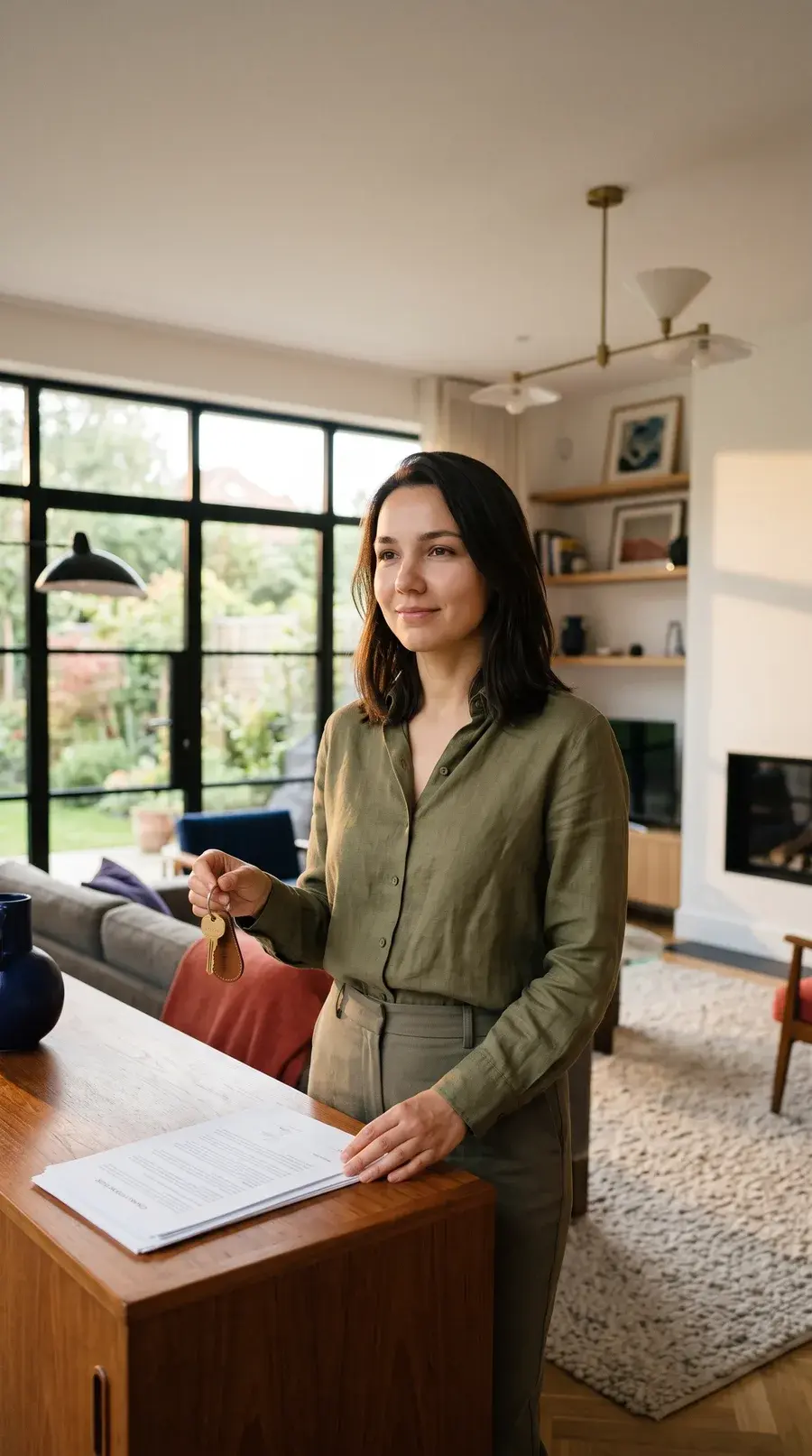
An audio-visual rehearsal of the future you described — you in the picture, your own voice over it. Still images, or video.


06 · Your voice stays yours
Yes, it’s AI voice cloning. You clone your own voice, with your consent, deletable anytime. It’s different when the voice is yours.
Why it is built this way
A voiceprint is sensitive information under Australia’s Privacy Act 1988, Illinois’s BIPA and GDPR Article 9 — which is why DeepBliss deletes rather than hides, and records consent rather than assumes it.
Your twenty seconds of speech goes straight to the voice provider and is never stored on DeepBliss. What we keep is an ID for the voice it makes, used to speak your affirmations and nothing else.
Delete your Voice Twin and the model is deleted at the provider, not hidden. Re-record and the old one goes the same way. Delete your account and every voice and every file goes with it.
Every time audio is made, the voice is checked against the account asking for it. Sharing a track shares that one finished track. The voice stays with you.
A client’s or a partner’s voice enters DeepBliss only through an invitation they accept, and the consent is recorded: when, and the exact wording they were shown.
07 · What it costs
2 Voice Twins and 3 affirmation experiences a month, up to 2 minutes each. Your first one is free — no card.
5 Voice Twins and 10 experiences a month, up to 15 minutes each, with custom scripts and dual-layer sound.
20 Voice Twins and 40 experiences a month, up to 30 minutes each, in lossless WAV.
Every plan and allowance, side by side, on the pricing page.
08 · Start here
01
Read anything aloud: a paragraph, a menu, the back of a book. A phone or a laptop is enough, and there is nothing to download.
02
The Oracle asks what you need and drafts lines you can believe today. Keep them, change them, or write your own.
03
Your Voice Twin reads each line over sound matched to the state you’re practicing for. A new line never needs a new recording.
The Discover plan is free and needs no card: 2 Voice Twins and 3 affirmation experiences a month, up to 2 minutes each.
09 · Other apps
DeepBliss isn’t the only way to hear affirmations in your own voice. Some apps clone it, some have you record each line, and one has you say the lines back yourself. Each row below comes from that app’s own site or store listing.
| App | Whose voice | How you record | Runs on |
|---|---|---|---|
| DeepBliss | Yours, cloned, or one of our library voices | About 20 seconds of natural speech, once | Any web browser, phone or computer |
| SelfSpeak | Yours, cloned | Three short sentences, once | iPhone, Android |
| Zuluu | Yours, cloned | Five short sentences, once | iPhone, iPad |
| Selfpause | Yours, recorded | A new take for every line | iPhone, iPad, Android |
| Auretype | Yours, cloned, or a studio voice | A short guided sample, once | App Store listing not found when checked |
| Lumié | Yours, recorded; Pro adds an AI voice that its site and store listing describe differently | A new take for every line | Android, web |
| Say After Me | A stock guide voice, then yours as you repeat each line aloud | None; you speak each line back live | iPhone, iPad |
Checked against each app’s site or store listing on 28 September 2026. Prices, sound options and sources for every app are in our full comparison.
10 · FAQ
DeepBliss turns about 20 seconds of natural speech into a Voice Twin that reads your affirmations in your own voice, in the browser, with nothing to install. Write the lines yourself or let the Oracle draft them with you. Each one plays over sound matched to the state you’re practicing for, and a new line never needs a new recording.
About 20 seconds of natural speech. You read anything — a quote, a menu, a few sentences. The model learns how you speak, not what you said, and then speaks any new affirmation in that voice without you recording again.
Honest answer: the one published head-to-head (Jo et al. 2024, PMID 39061378, 21 participants) found the two voices produced different brain activity but no difference in how impactful people rated them. Some people prefer a narrator. Try both and keep the one you actually return to — DeepBliss offers natural voices as well as your own.
Your voice sample and model are encrypted in transit and at rest, you can delete the model yourself at any time, and it is never sold, shared, or used to train shared models. It is used only to generate your own affirmations.
Only for binaural beats, which need a different tone in each ear. Monaural beats, isochronic tones and colored noise all work on speakers, and the Oracle tells you which recipe needs headphones before you press play.
Recording means speaking every line yourself, so your library stops where your patience does. A Voice Twin is built once from one short sample and then speaks unlimited new lines on demand. Both are your voice; cloning removes the per-line effort.
Yes. Wood et al. 2009 (PMID 19493324) found that repeating generic positive statements like “I am a lovable person” worsened mood for people with low self-esteem. Your voice does not override the wording, so DeepBliss writes at graduated believability — plausibly true today — and lets you edit every line.
No. DeepBliss runs in your browser, on a phone or a computer, so there is nothing to install. The Oracle drafts the affirmations with you, and an AI voice model built from your 20-second recording reads them back. Your first experience is free. No card.
A synthetic voice that reads your affirmations aloud. Here it can be your own: a Voice Twin built from about 20 seconds of your speech. Or pick one of our natural library voices. Either way, a new line never needs a new recording. Which voice suits you is a preference, not a proven advantage (Jo et al. 2024, PMID 39061378).
11 · The honest part
Self-reference research finds that information related to the self can be remembered better than semantic or other-referent information (Symons & Johnson 1997, PMID 9136641). That does not establish an own-voice advantage. In the direct synthesized-voice comparison, Jo et al. 2024 (PMID 39061378) found neural differences between own and other voices but did not establish superior subjective efficacy. Choose your own voice if you prefer it — worth trying, not a promise.
The sound layer is optional and modest.
DeepBliss is a wellness practice, not therapy or medical treatment. If what you are carrying is heavier than a practice can hold, a clinician is the right next step.
Twenty seconds of your voice, the words you actually need, and sound matched to the state you are practicing for. The first one is free.
Last reviewed 2026-08-26 by Nick Morgenstern
